
Shoulder Tendinopathy
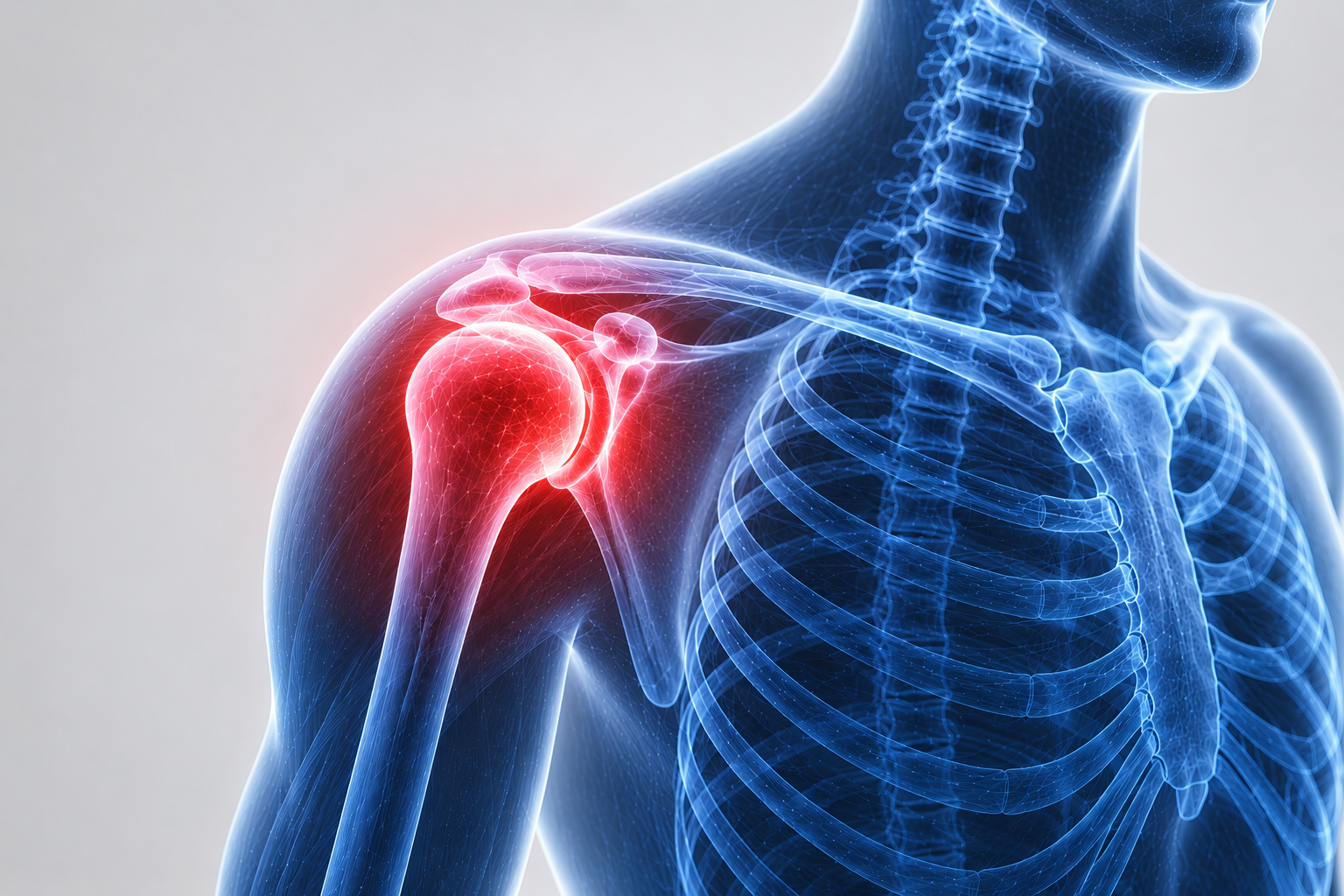
Shoulder tendinopathy describes pain related to the rotator cuff tendons. These tendons help lift and control the arm. Symptoms may begin after an increase in activity or develop gradually as tendon capacity changes with age. The condition is often called rotator cuff-related shoulder pain or subacromial pain.
Common causes and risk factors
• A sudden increase in lifting, sport or overhead work
• Repeated loading without enough recovery
• Reduced strength or shoulder-blade control
• Age-related tendon change
• A combination of tendon, bursa and joint sensitivity
Symptoms and signs
• Pain on the outer shoulder or upper arm
• Pain reaching overhead, behind the back or away from the body
• Night pain
• Pain-related weakness
How is it diagnosed?
Diagnosis is usually clinical. A scan can show tendon changes even in people without pain, so imaging findings must be matched to symptoms and examination. Imaging is more useful after trauma, with significant weakness or when progress is poor.
Treatment options
The main treatment is education and progressive exercise to improve tendon and muscle capacity. Activities are modified rather than stopped completely. Pain relief can support rehabilitation. A steroid injection may reduce pain in the short term for selected patients, but repeated injections are generally avoided. Decompression surgery is indicated for select cases.
When should I see a specialist?
Arrange an assessment if you have:
• Pain or weakness following a significant injury
• Symptoms that continue beyond 6-12 weeks despite a suitable exercise programme
• Severe night pain, stiffness or diagnostic uncertainty
• Inability to work or perform essential daily tasks
Frequently asked questions
Is this the same as impingement?
The term impingement is still used, but pain is usually influenced by several factors rather than a tendon simply being trapped by bone.
Should exercise hurt?
Mild, short-lived discomfort can be acceptable if it settles and is not worse the next day. The programme should be adjusted if pain flares significantly.
Will a steroid injection cure it?
An injection may provide short-term relief but does not rebuild tendon capacity. Exercise and load management remain important.
What does the evidence say?
The evidence recommends exercise-based care with improvement to be expected at around 6-12 weeks. NICE guidelines supports physiotherapy, activity modification and selective injection.
Appointments
Request a consultation
Send us a few details and Mr Imam's secretary will be in touch to arrange a consultation at a time and location that suits you.
Thank you, your request has been sent
Mr Imam's secretary will reply to you by email to arrange your consultation.