
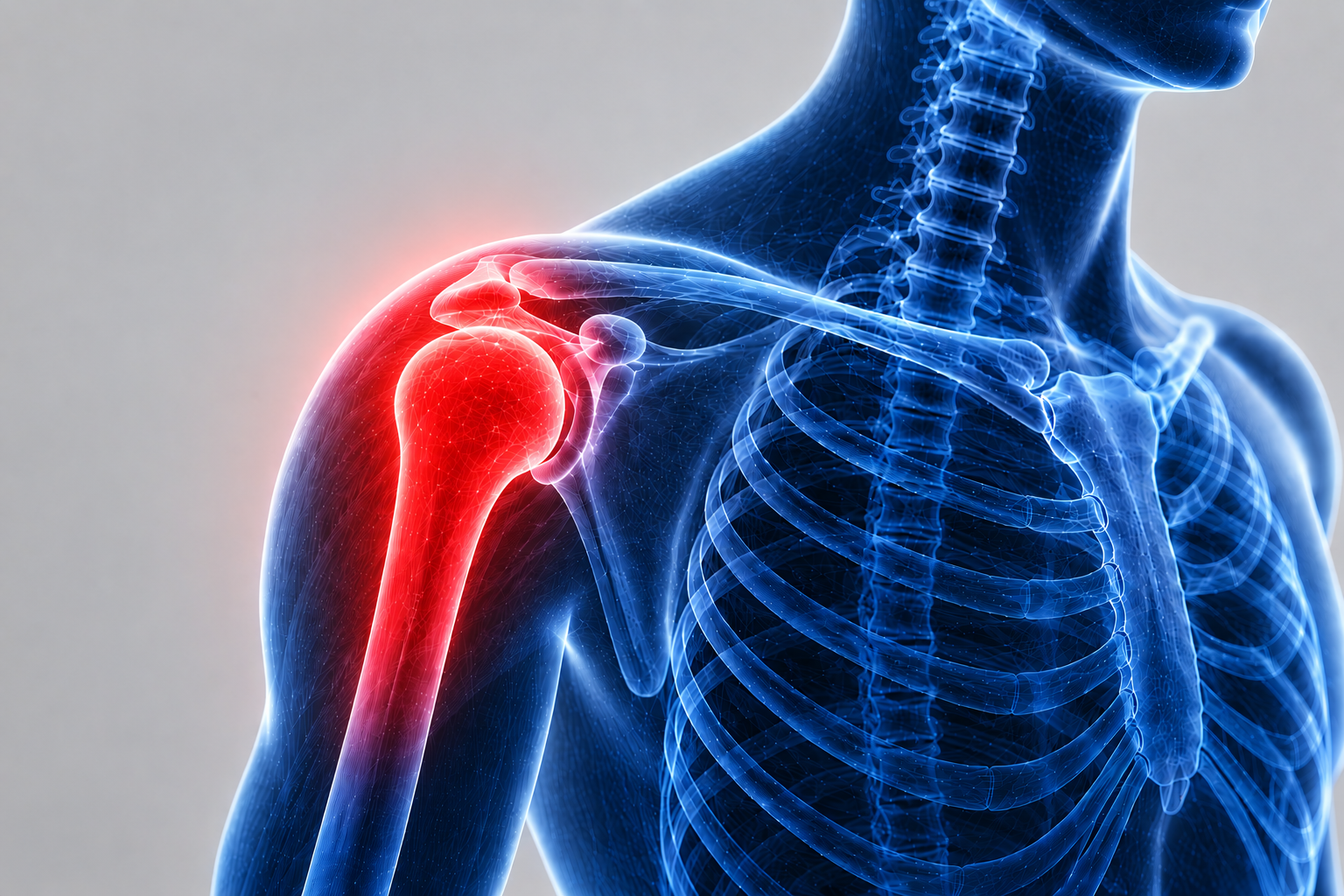
A proximal humerus fracture is a break near the top of the upper arm bone. It is common after a simple fall in older adults with osteoporosis, but can also follow a high-energy injury in younger people. Many fractures remain well aligned and heal without surgery.
Proximal Humerus Fractures
Common causes and risk factors
• Falls onto the arm or shoulder
• Osteoporosis or fragile bones
• Sporting or road traffic injury
• Occasionally shoulder dislocation
Symptoms and signs
• Severe shoulder pain
• Swelling and extensive bruising
• Difficulty moving the arm
• Occasionally altered sensation
How is it diagnosed?
X-rays identify the fracture pattern and displacement. CT is sometimes used for complex fractures or surgical planning. Nerve and circulation checks are important.
Treatment options
Most minimally displaced fractures are treated with a sling, pain relief and rehabilitation. Surgery may involve plates and screws, nails or shoulder replacement when the fracture is severely displaced, the joint surface is damaged or the blood supply is at risk.
When should I see a specialist?
Arrange an assessment if you have:
• Numbness or new weakness
• Severe pain after a fall
• Increasing rather than improving pain or function
Frequently asked questions
Will I regain full movement?
Many people recover useful function, but some stiffness is common, especially after complex fractures.
When does physiotherapy start?
Timing depends on fracture stability. Movement often starts gradually once the treating team considers it safe.
Is surgery better?
Not for every fracture. Evidence has not shown a universal benefit for surgery in older adults with displaced fractures.
What does the evidence say?
Most proximal humerus fractures can and should be managed non-operatively. A select number i.e those that are very displaced do better with surgery. Treatment should be individualized.
Appointments
Request a consultation
Send us a few details and Mr Imam's secretary will be in touch to arrange a consultation at a time and location that suits you.
Thank you, your request has been sent
Mr Imam's secretary will reply to you by email to arrange your consultation.