
AC Joint Pain and Instability
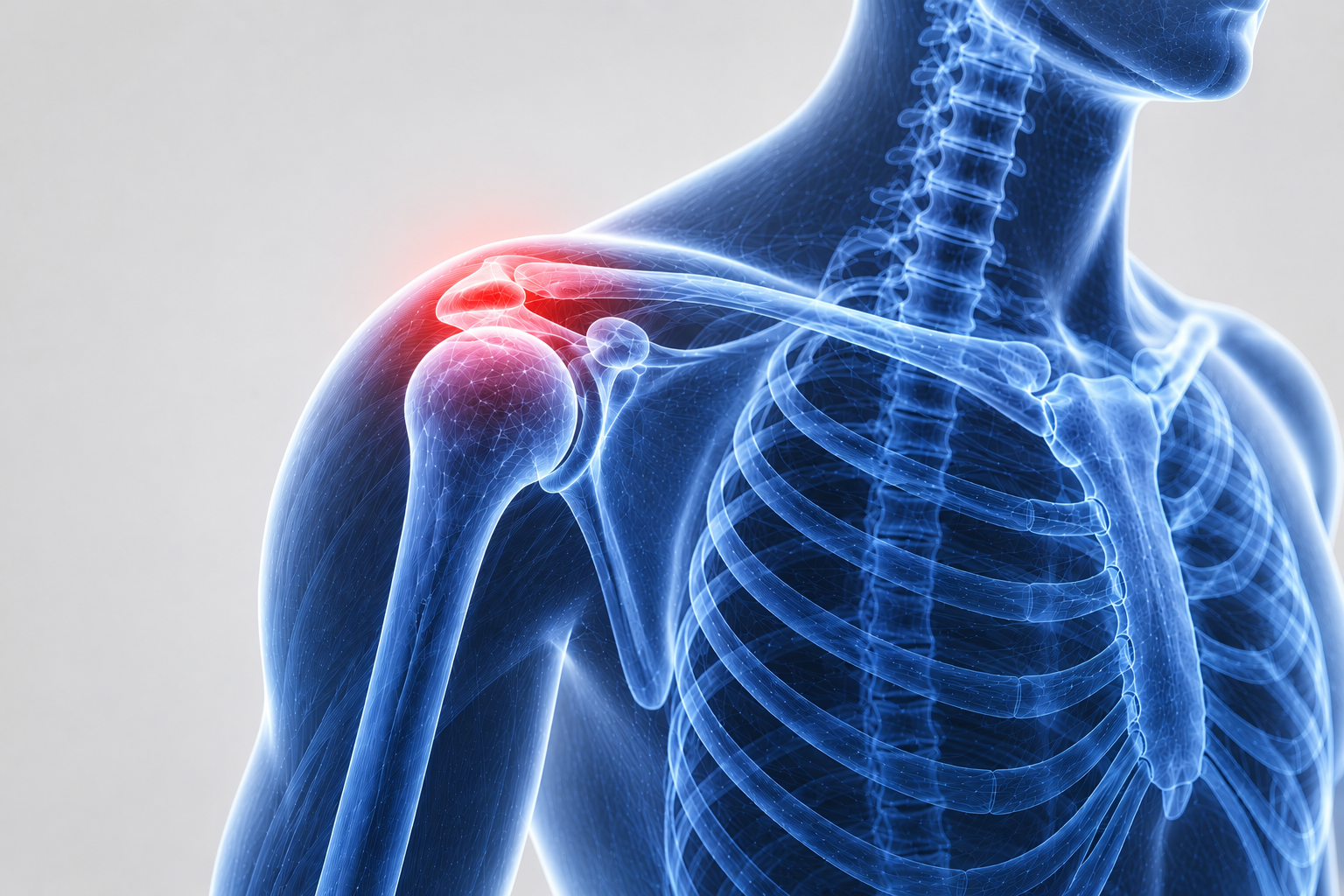
The acromioclavicular (AC) joint is the small joint on top of the shoulder where the collar bone meets the shoulder blade. It may become painful from wear and tear or be injured when a person lands directly on the shoulder. A ligament injury can cause a visible bump, sometimes called a separated shoulder.
Common causes and risk factors
• Direct fall onto the shoulder
• Contact sport, cycling or road traffic injury
• Age-related arthritis
• Repeated heavy or overhead activity
Symptoms and signs
• Localised pain and tenderness on top of the shoulder
• Pain when reaching across the body or pressing
• Difficulty lying on the affected side
• A visible bump or sense of movement after injury
How is it diagnosed?
Diagnosis is usually based on the location of pain, examination and X-rays. An injection of local anaesthetic may sometimes help confirm that the AC joint is the main source of pain.
Treatment options
Most low-grade injuries and arthritic pain are managed with activity changes, pain relief and rehabilitation. Injection may offer temporary benefit in selected arthritic cases. Surgery may be considered for persistent painful arthritis or severe, symptomatic instability that affects work, sport or daily life.
When should I see a specialist?
Arrange an assessment if you have:
• A prominent deformity after injury
• Skin that is stretched or threatened over the collarbone
• Persistent focal pain despite rehabilitation
• Weakness, numbness or a high-energy injury
Frequently asked questions
Will a dislocated shoulder always become unstable?
No, but recurrence is more common in younger active patients and after certain structural injuries.
Can physiotherapy stop dislocations?
It can substantially improve control and confidence, particularly in atraumatic instability. Structural traumatic instability may still require surgery.
What does stabilisation surgery do?
It repairs or tightens damaged stabilising tissues and, when needed, addresses bone loss to reduce the risk of further dislocation.
What does the evidence say?
The evidence supports structured rehabilitation for atraumatic instability and surgery for recurrent traumatic instability or significant structural damage.
Appointments
Request a consultation
Send us a few details and Mr Imam's secretary will be in touch to arrange a consultation at a time and location that suits you.
Thank you, your request has been sent
Mr Imam's secretary will reply to you by email to arrange your consultation.