
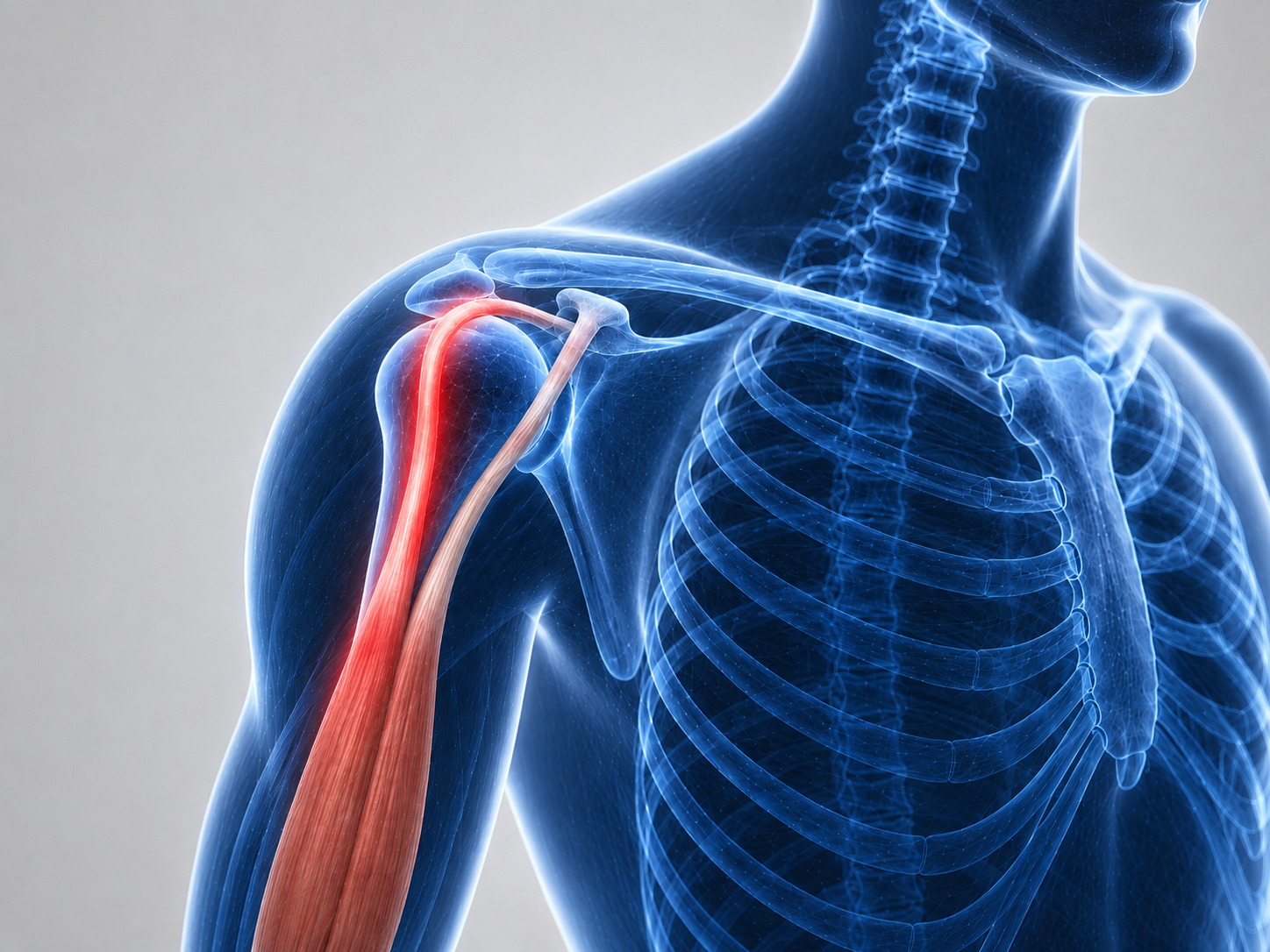
A proximal biceps tear affects the long-head biceps tendon near the shoulder. The tendon may gradually wear through or tear during lifting. The muscle can move down the arm, creating a rounded “Popeye” bulge. Because another biceps tendon remains attached, many people retain good everyday function.
Proximal Biceps Tendon Tears
Common causes and risk factors
• Age-related tendon wear
• Rotator cuff disease
• Sudden lifting or pulling
• A fall or shoulder injury
Symptoms and signs
• A pop or pain at the front of the shoulder
• Bruising down the upper arm
• A visible change in biceps shape
• Cramping or mild weakness
How is it diagnosed?
The appearance and history often make the diagnosis clear. Examination assesses biceps and rotator cuff function. Ultrasound or MRI may be used when another shoulder injury is suspected.
Treatment options
Most isolated proximal tears are treated with short-term activity modification, pain relief and physiotherapy. Surgery, usually biceps tenodesis, may be considered for persistent cramping, ongoing pain or high occupational and sporting demands.
When should I see a specialist?
Arrange an assessment if you have:
• Persistent pain or cramping
• Associated shoulder weakness
• A traumatic injury in a younger active patient
• Concern about an accompanying rotator cuff tear
Frequently asked questions
Will the Popeye shape go away?
The shape often remains, although bruising and swelling settle.
Will I lose much strength?
Most people have only modest loss of strength and manage daily activities well.
When is surgery useful?
It is mainly considered for ongoing symptoms or demanding activity rather than appearance alone.
What does the evidence say?
AAOS patient guidance notes that many proximal biceps tears do not typically require surgery because the remaining attachment preserves useful function.
Appointments
Request a consultation
Send us a few details and Mr Imam's secretary will be in touch to arrange a consultation at a time and location that suits you.
Thank you, your request has been sent
Mr Imam's secretary will reply to you by email to arrange your consultation.