
Cubital Tunnel Syndrome
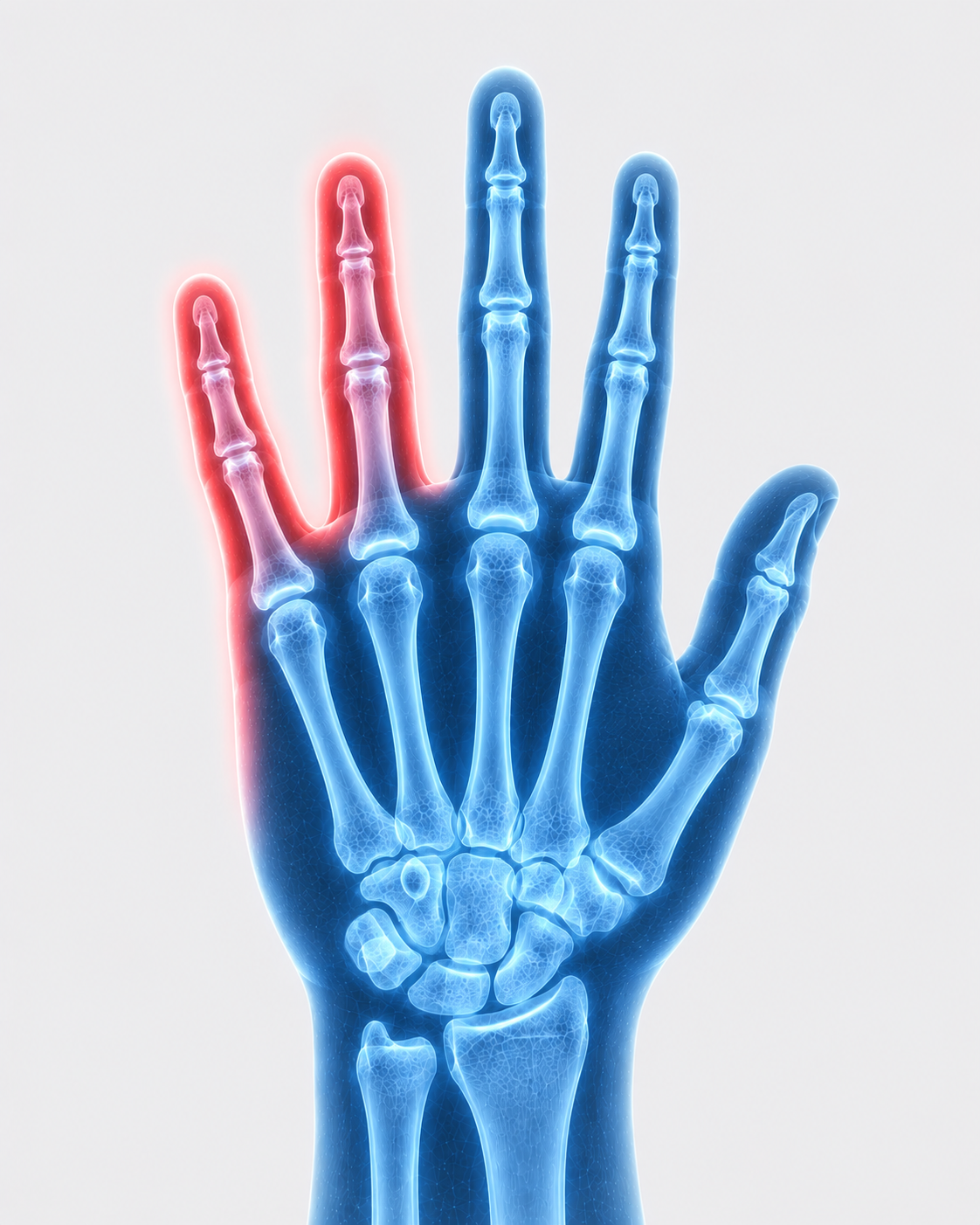
Cubital tunnel syndrome occurs when the ulnar nerve is compressed or stretched around the inside of the elbow. This is the “funny bone” nerve. It supplies feeling to the little finger and half of the ring finger and powers several small hand muscles.
Common causes and risk factors
• Keeping the elbow bent for long periods
• Leaning on the elbow
• Previous fracture, arthritis or swelling
• The nerve moving over the bony prominence
• Sometimes no clear cause
Symptoms and signs
• Tingling or numbness in the ring and little fingers
• Symptoms at night or while using a phone
• Aching at the inside of the elbow
• Weak grip, clumsiness or muscle wasting
How is it diagnosed?
Diagnosis is based on symptom pattern and examination of sensation, strength and the nerve at the elbow. Nerve-conduction tests may confirm severity and help identify another site of compression.
Treatment options
Mild symptoms are treated by reducing pressure, avoiding prolonged bending and using a night splint. Hand therapy may help. Surgery aims to decompress the nerve, with or without moving it and is indicated when symptoms persist or there is weakness, muscle wasting or significant test abnormality.
When should I see a specialist?
Arrange an assessment if you have:
• Progressive weakness or hand muscle wasting
• Constant numbness
• Symptoms affecting sleep or work despite activity changes
• Previous elbow trauma or deformity
Frequently asked questions
Can it improve without surgery?
Yes, especially when symptoms are intermittent and there is no weakness.
Will surgery restore lost muscle?
Recovery is less predictable once significant wasting has developed, which is why early review is important.
How can I sleep more comfortably?
Avoid tightly bending the elbow; a soft towel or night splint can help keep it straighter.
What does the evidence say?
AAOS guidance recommends non-surgical measures for mild cases and specialist assessment when weakness, muscle loss or persistent symptoms indicate more advanced nerve compression.
Appointments
Request a consultation
Send us a few details and Mr Imam's secretary will be in touch to arrange a consultation at a time and location that suits you.
Thank you, your request has been sent
Mr Imam's secretary will reply to you by email to arrange your consultation.