
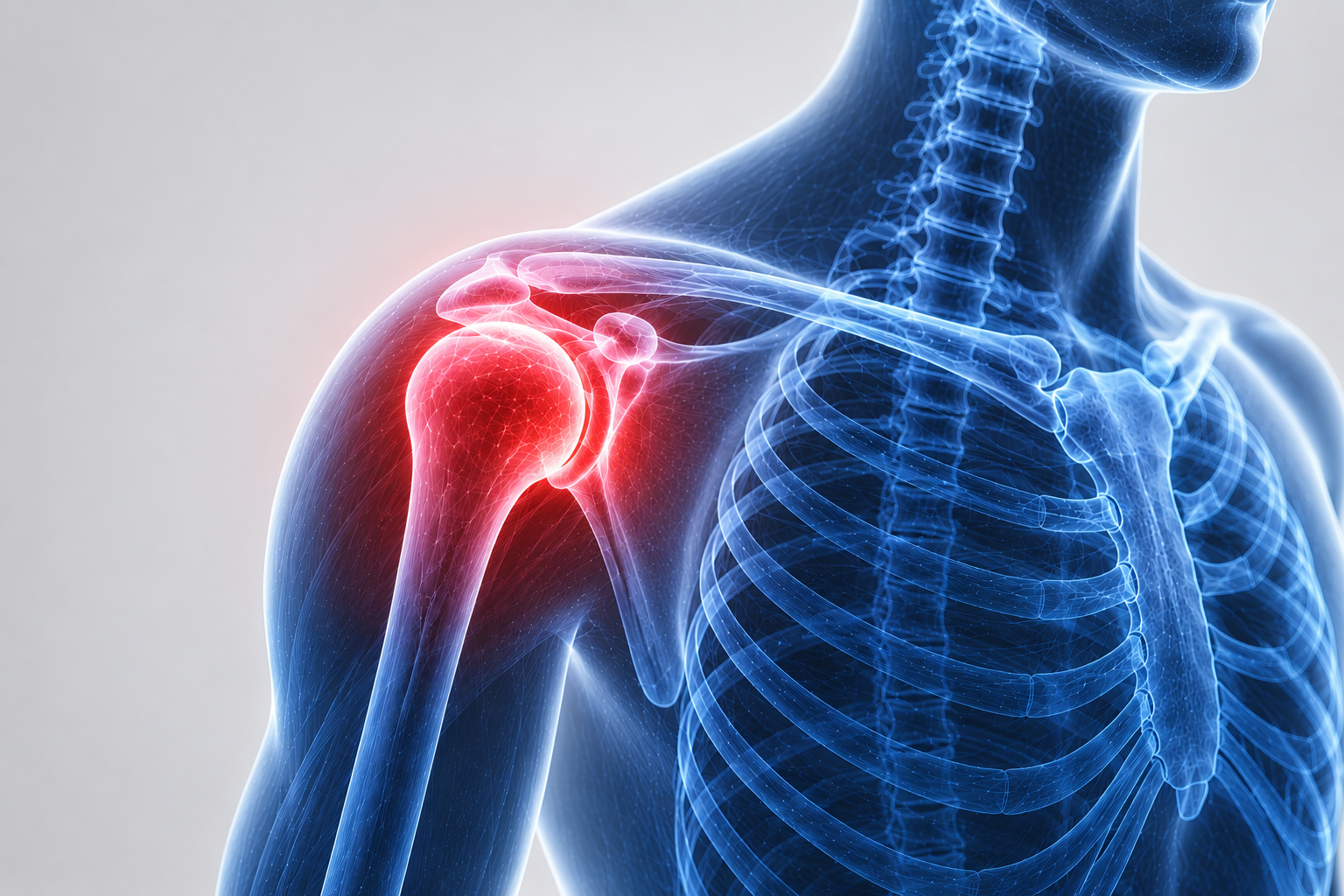
Frozen shoulder, or adhesive capsulitis, occurs when the capsule surrounding the shoulder joint becomes painful, inflamed and tight. Movement gradually reduces in several directions. It commonly progresses through painful, stiff and recovery phases, although these phases can overlap.
Frozen Shoulder
Common causes and risk factors
• Often no clear trigger
• Diabetes
• A period of reduced movement after surgery or injury
• Occasionally after another painful shoulder condition
Symptoms and signs
• Progressive pain, often worse at night
• Marked stiffness
• Difficulty reaching overhead or behind the back
• Problems dressing, washing or sleeping
How is it diagnosed?
Frozen shoulder is usually diagnosed from the pattern of pain and restricted movement. Both active movement and movement assisted by the examiner are limited. X-rays may be used to exclude arthritis or another cause of stiffness.
Treatment options
Treatment is matched to the stage and severity. Options include pain relief, gentle mobility exercises, physiotherapy and a joint steroid injection. Hydrodilatation may help some patients. Manipulation under anaesthetic or keyhole capsule release is considered when severe stiffness remains despite non-surgical care.
When should I see a specialist?
Arrange an assessment if you have:
• The diagnosis is uncertain
• Pain or stiffness is severe and affecting sleep or basic activities
• There is little improvement despite treatment
• You have diabetes and symptoms are difficult to control
Frequently asked questions
Does frozen shoulder get better?
Most people improve, but recovery is often slow and can take many months or longer.
Can aggressive stretching speed recovery?
Forceful stretching can worsen pain, especially early on. Exercises should be appropriate to the stage and symptom response.
Can it return?
It rarely returns in the same shoulder, although the other shoulder can be affected later.
What does the evidence say?
The evidence shows that this is a self-limiting condition with people eventually improve with or without treatment. Surgery may expedite recovery.
Appointments
Request a consultation
Send us a few details and Mr Imam's secretary will be in touch to arrange a consultation at a time and location that suits you.
Thank you, your request has been sent
Mr Imam's secretary will reply to you by email to arrange your consultation.