
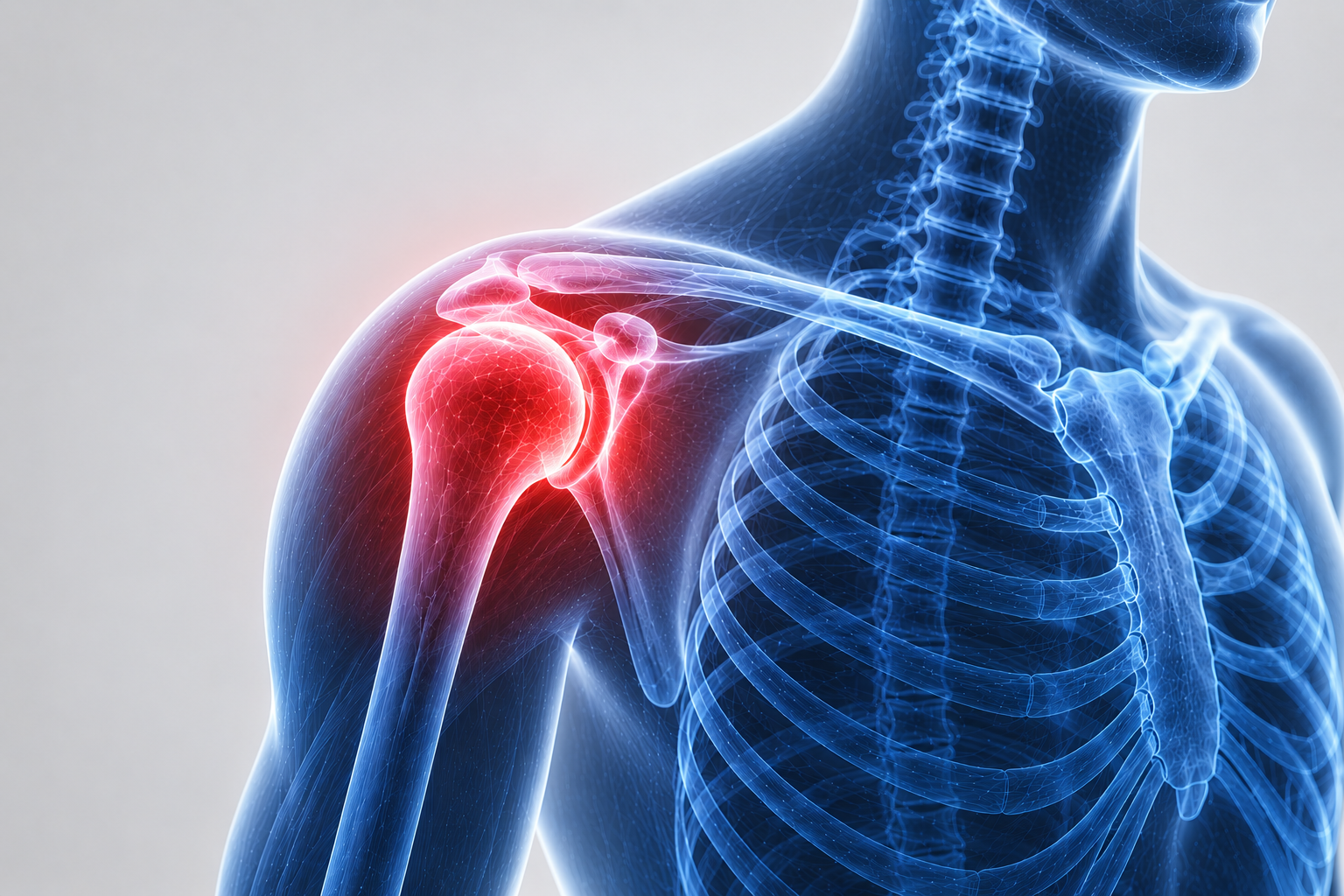
Shoulder instability means the ball of the shoulder does not remain securely centred in its socket. It may completely dislocate, partly slip out (a subluxation), or simply feel loose and unreliable. Instability can follow an injury or develop because the ligaments are naturally loose and the muscles do not control the joint effectively.
Shoulder Instability
Common causes and risk factors
• A traumatic dislocation during sport or a fall
• Repeated overhead activity
• Naturally loose joints or generalised hypermobility
• Weakness or poor coordination of the shoulder muscles
• Damage to the labrum, ligaments or bone
Symptoms and signs
• A feeling that the shoulder may slip out
• Recurrent dislocation or partial dislocation
• Pain, clicking or apprehension in certain positions
• Weakness and reduced sporting confidence
How is it diagnosed?
The specialist will ask how the first episode occurred, how often instability happens and which movements trigger it. Examination assesses movement, strength, joint laxity and control. X-rays are standard after a dislocation; MRI or CT may be used to assess labral damage or bone loss.
Treatment options
Physiotherapy focuses on rotator cuff strength, shoulder-blade control, coordination and confidence. Following a first dislocation, treatment depends on age, activity and injury pattern. Stabilisation surgery may be discussed after recurrent episodes, major structural damage, significant bone loss or failure of rehabilitation.
When should I see a specialist?
Arrange an assessment if you have:
• Repeated slipping, dislocations or fear of movement
• Numbness, weakness or altered circulation after injury
• Inability to return to work or sport despite rehabilitation
Frequently asked questions
Will a dislocated shoulder always become unstable?
No, but recurrence is more common in younger active patients and after certain structural injuries.
Can physiotherapy stop dislocations?
It can substantially improve control and confidence, particularly in atraumatic instability. Structural traumatic instability may still require surgery.
What does stabilisation surgery do?
It repairs or tightens damaged stabilising tissues and, when needed, addresses bone loss to reduce the risk of further dislocation.
What does the evidence say?
The evidence supports structured rehabilitation for atraumatic instability and surgery for recurrent traumatic instability or significant structural damage.
Appointments
Request a consultation
Send us a few details and Mr Imam's secretary will be in touch to arrange a consultation at a time and location that suits you.
Thank you, your request has been sent
Mr Imam's secretary will reply to you by email to arrange your consultation.